Sustained Always On
Sustained Always On
Sustained Always On is calculated by looking across all of the signals Uplevel has for a given contributor each day. Each activity is assigned a weight, for example, a 30 minute meeting gets 30 minutes of "weight".
Uplevel assumes that the 8 hours with the most activity "weight" are the given contributor's "working hours" for the given day. A contributors "working hours" may change day-to-day as the inputs to their activity weights change.
Anything beyond those assumed "working hours" are classified as "always on" time.
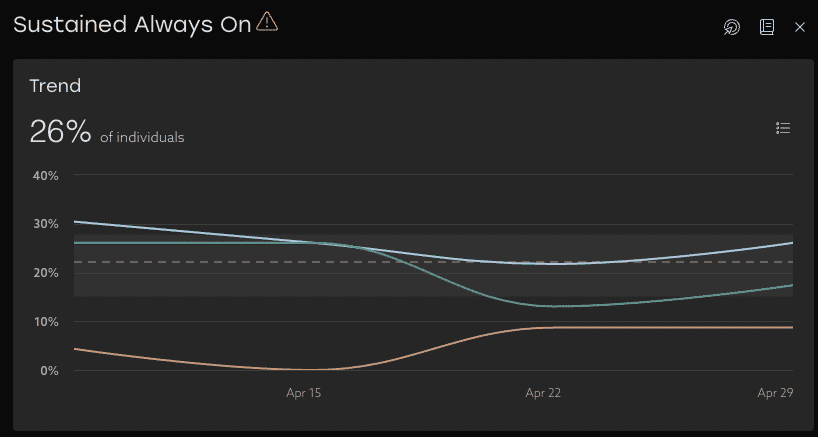
Use this chart to understand your Always On trends over time. Levels of Sustained Always On are categorized into Elevated and High.
- Elevated: defined as greater than 30 minutes of work a day outside normal "working hours", over more than half of the weeks in the selected time period.
- High: defined as greater than 1 hour of work outside of normal "working hours", over more than half of the weeks in the selected time period
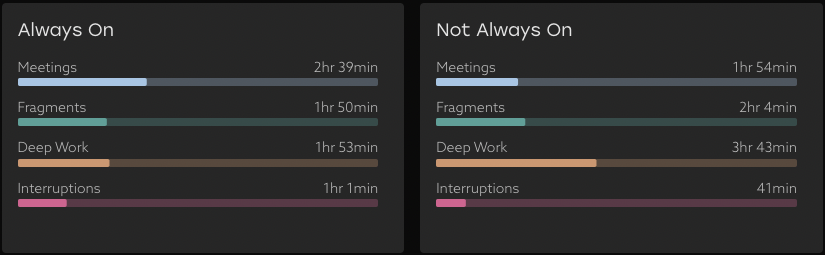
Always On & Not Always On
These chart looks at those who are or aren't currently experiencing Sustained Always On. It breaks down each group's median time in meetings, deep work, interruptions, and fragments which can indicate the root cause of long hours. These two charts compare the experiences of those who are currently experiencing elevated levels of Always On to those who aren't.

Tip: if Deep Work looks low, jump to your Deep Work breakdown for a deeper analysis.
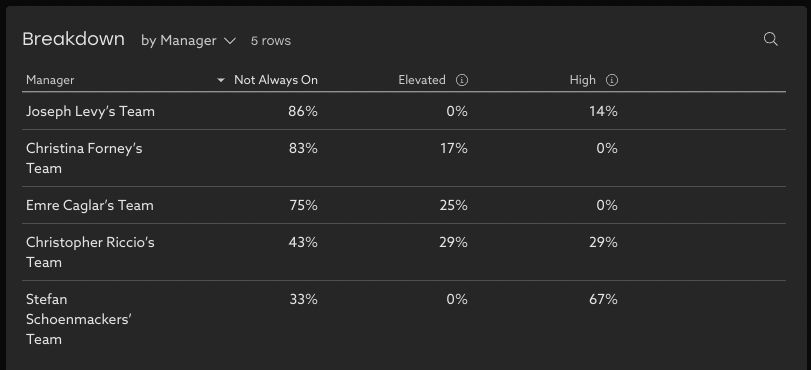
Breakdown by Manager
Drill down to see what percentage of each team (the number of individuals) have been at each level of Sustained Always On activity over the selected time frame. Teams with high value have had more individual at a elevated level, for a longer duration of time.
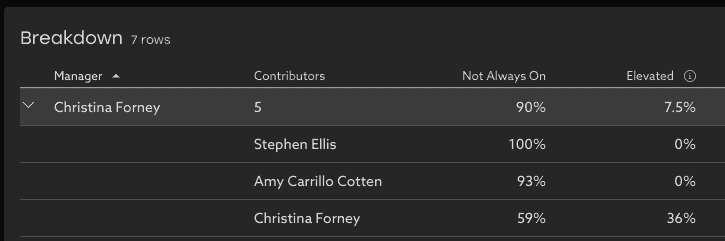
Individual details where appropriate
Always On data is vailable at the individual level, complementing the same details about Deep Work and Meeting categories in order to give a complete picture of teams' working habits.
Visible to who
By default, information at the individual level is provided only to those in the reporting tree - who have context to interpret the data and help support the team.
Specifically, this detail is available to the individual themselves, and their manager and leaders who they report up to. Individual level details are not available about individuals outside your reporting tree who don't report up to you.
Roll-up stats about entire teams are available to everyone, as long as the teams are the appropriate minimum size as chosen by your organization. This provides org wide visibility to group norms and trends.
Organization experience options
Options are available to configure the experience to match your organization's goals and norms:
- The minimum team rollup size can be adjusted, which determines the smallest team where rollup information is visible to all.
- Individual level information about Always On, Deep Work and Meeting categories can be made available based on the org chart reporting tree (the default experience), visible to all (for a totally open organization), or visible to none.
Contact support@uplevelteam.com to review the options and make any changes to these experience options for your organization.